


 Cart
Cart
 sales@molnova.com



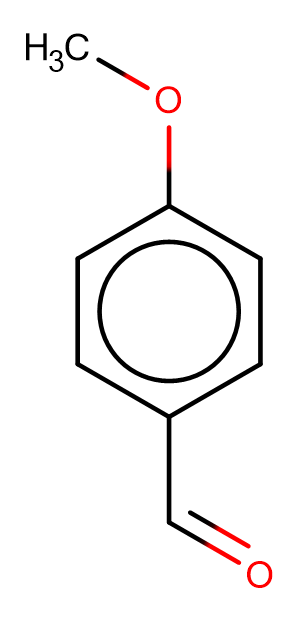
Anisic aldehyde
CAS No. 123-11-5
Anisic aldehyde( 4-Methoxybenzaldehyde | p-Anisaldehyde | Anisaldehyde | P-Methoxybenzaldehyde | 4-Anisaldehyde )
Catalog No. M21217 CAS No. 123-11-5
Anisic aldehyde is a naturally occurring fragrant phenolic compound it has significant antifungal activity against Candida including azole-resistant strains.
Purity : >98% (HPLC)
 COA
Datasheet
HNMR
HPLC
MSDS
Handing Instructions
COA
Datasheet
HNMR
HPLC
MSDS
Handing Instructions
| Size | Price / USD | Stock | Quantity |
| 1 mL x 10 mM in DMSO | 28 | In Stock |


|
| 100MG | Get Quote | In Stock |
|
| 200MG | Get Quote | In Stock |
|
| 500MG | Get Quote | In Stock |
|
| 1G | 27 | In Stock |
|
Biological Information
-
Product NameAnisic aldehyde
-
NoteResearch use only, not for human use.
-
Brief DescriptionAnisic aldehyde is a naturally occurring fragrant phenolic compound it has significant antifungal activity against Candida including azole-resistant strains.
-
DescriptionAnisic aldehyde is a naturally occurring fragrant phenolic compound it has significant antifungal activity against Candida including azole-resistant strains.
-
In Vitro——
-
In Vivo——
-
Synonyms4-Methoxybenzaldehyde | p-Anisaldehyde | Anisaldehyde | P-Methoxybenzaldehyde | 4-Anisaldehyde
-
PathwayOthers
-
TargetOther Targets
-
RecptorOthers
-
Research Area——
-
Indication——
Chemical Information
-
CAS Number123-11-5
-
Formula Weight136.15
-
Molecular FormulaC8H8O2
-
Purity>98% (HPLC)
-
SolubilityIn Vitro:?DMSO : 100 mg/mL (734.48 mM)
-
SMILESCOc1ccc(C=O)cc1
-
Chemical Name——
Shipping & Storage Information
-
Storage(-20℃)
-
ShippingWith Ice Pack
-
Stability≥ 2 years
Reference
1.Shreaz S Bhatia R Khan N et al. Interesting anticandidal effects of anisic aldehydes on growth and proton-pumping-ATPase-targeted activity[J]. Microbial Pathogenesis 2011 51(4):277-284.
molnova catalog



related products
-
Glycyl-glycine
Glycylglycine (Gly-Gly) is a dipeptide used in biochemical research. It is the simplest of all dipeptides and is used as a starting template for preparation of more complex peptides. Glycine is involved in the body's production of DNA phospholipids and collagen and in the release of energy.
-
D-Fructose-13C6
D-Fructose-13C6 can be used as an internal standard for the quantification of D-fructose by GC- or LC-MS.
-
2,2,14,14-Tetramethy...
2,2,14,14-Tetramethyl-8-oxopentadecanedioic acid is a ketone compound extracted from patent WO2002030860A2, compound example II-9. 2,2,14,14-Tetramethyl-8-oxopentadecanedioic acid can be used for the research of cardiovascular diseases, dyslipidemias, dysproteinemias, and glucose metabolism disorders .
